Invited Speaker
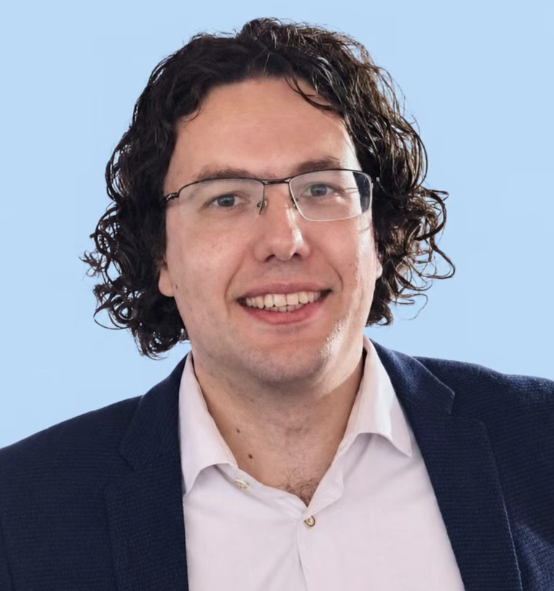
Prof. Laurens Theobald de Haan
South China Normal University, ChinaSpeech Title: Advanced Polymer Network Assembly Methods for Responsive Liquid Crystal Materials and Devices
Abstract: Liquid crystal polymer networks are one of the most promising advanced materials for the development of responsive devices. These materials have been used as actuators, soft robots, sensors, photonic devides, etc. A crucial requirement for achieving the full potential of liquid crystal networks is the continued development of new methods to synthesize and assemble them. During the previous decades these processes have been revolutionized several times, and this process is still ongoing today. Here, several advanced methods for the assembly of responsive liquid crystal polymer networks will be presented. One kind of material that will be discussed contains covalent bonds that can be established and broken under controlled circumstances to achieve reprocessibilty and recycling. A key requirement for these materials is that the stimuli-responsive behavior is kept intact after the assembly is completed. The second kind of material is a (semi)-interpenetrating network between a cholesteric polymer network and a responsive polymer. The cholesteric network reflects light of a wavelength determined by the pitch of the cholesteric helix, and the secondary polymer bestows the material with stimuli-responsiveness. The resulting material has potential for the development of photonic sensors that provide an optical signal when a specific stimulus is present to alert a user of the presence of this stimulus.
Biography: Prof. Laurens Theobald de Haan received his PhD degree in 2014 from Eindhoven University of Technology at the group of Stimuli-responsive Functional Materials and Devices (SFD). After obtaining his PhD degree he accepted a postdoctoral position at South China Normal University (SCNU) in Guangzhou. In 2019 he was awarded a national talents program and obtained his current position as a full professor at SCNU. His current projects focus on the development of responsive surfaces based on liquid crystal polymers. He and his students have prepared photonic surfaces that change color in response to heat, water, and strain, as well as surfaces that change their shape in response to an electric field. He has published papers in Advanced Functional Materials, ACS Applied Materials and Interfaces and Journal of Materials Chemistry C. He was recently awarded the Research Fund for International Scientists (RSIF-II) from NSFC.