Invited Speaker
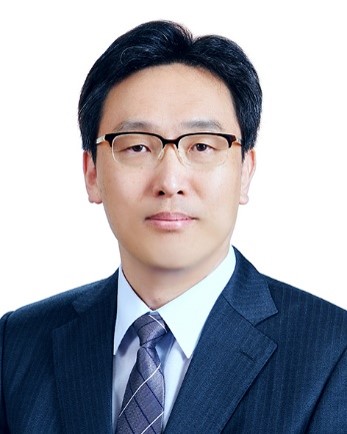
Prof. Ildoo Chung
Department of Polymer Science & EngineeringPusan National University, Republic of Korea
Speech Title: Biodegradable and Thermoresponsive Hollow Porous Micro/nanoparticles for Sustained Drug Release
Abstract: Various types of porous biodegradable polymers based on polycaprolactone (PCL), polylactide (PLA), and polyurethane were synthesized and used as drug delivery vehicles for bupivacaine and carboplatin. Porous biodegradable microspheres were fabricated by successful RAFT polymerization of methyl vinyl ketone (MVK) onto PCL and PLA, which was first synthesized by ring opening polymerization of lactide followed by an oil/water emulsion-evaporation method, then finally photodegradation of PMVK blocks by UV irradiation. Biodegradable porous polyurethane nanoparticles have also been fabricated using water-in-oil-in-water double emulsion and solvent evaporation methods. These nanoparticles are composed of biodegradable and biocompatible polyfumarateurethane (PFU) and L-threonine polyurethane (LTHU), designed for degradation through hydrolysis and enzymatic activity, facilitated by the presence of ester bonds and peptide bonds within the polymer backbone. Gel permeation chromatography (GPC) was used to evaluate the molecular weight and molecular weight distribution and monitored the photodegradability of the block copolymers. For photodegradation by UV light under dried condition, the molecular weight of triblock copolymer was decreased gradually with UV irradiation time, reaching close to that of macro-CTA, meaning that 90% of PMVK block was photodegraded after 24 h of UV irradiation. The morphology of microspheres was spherical with smooth surfaces before UV irradiation. Microspheres fabricated only from PCL homopolymers could also retain their smooth surface after UV irradiation. However, those from PCL-PMVK and PCL-PLA-PMVK block copolymers had rough surfaces and porous structures after UV irradiation due to the photodegradation of PMVK blocks as a porous template. The porosity and shape of the microspheres and shape of microspheres were dependent on the PMVK contents and size of microspheres. In addition, the drug loading, encapsulation efficiency, and drug release profiles, using UV-Vis spectroscopy, showed the highest encapsulation efficiency with 2.5% drug, and sustained release profile.
Keywords: Biodegradable, thermoresponsive, hollow porous, micro/nanoparticles, sustained drug release.
Biography: Ildoo Chung has been a Professor of Polymer Science and Engineering at Pusan National University, South Korea, since 2005. He received his Ph.D. from the same institution in 2000 and completed postdoctoral research at the University of Tennessee and the University of Alabama at Birmingham, USA, with expertise in chemistry and biomedical engineering. He is currently Vice President of the Polymer Society of Korea and Chair of an IUPAC Polymer Division subcommittee promoting research collaboration in East Asia. He also serves on the editorial board of Macromol. and previously served as Editor-in-Chief of the Journal of Adhesion and Interface. Professor Chung has published over 150 peer-reviewed papers and delivered more than 220 conference presentations. His research focuses on ATRP and RAFT polymerization, functional biomaterials, drug delivery systems, biodegradable polymers, photocurable and 3D-printable materials, dental and orthopedic polymers, tissue-engineering materials, and advanced polymer composites for biomedical and industrial applications.