Invited Speaker
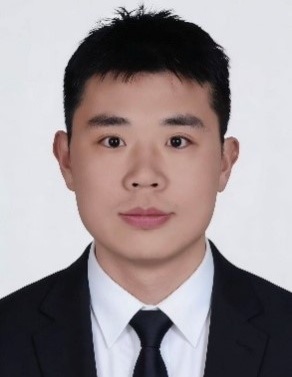
Dr. Zhuo Zhang
Associate Professor, School of Materials Science and EngineeringNorthwestern Polytechnical University, China
Speech Title: Constructing 3D Boron Nitride Thermal Conductive Network in Epoxy via Magnetic Field-assisted Tape Casting for Thermal Management
Abstract: With the rapid development of high-performance computing and artificial intelligence, electronic devices face growing heat dissipation challenges, driving the need for novel thermal interface materials (TIM). Hexagonal boron nitride (h-BN) offers excellent in-plane thermal conductivity and insulation, making it an ideal filler for TIM. However, traditional methods achieve only single-orientation alignment of boron nitride nanosheets (BNNS), limiting synergistic improvement of both in-plane and through-plane thermal conductivity.
This study proposes a magnetic field-assisted tape casting method to construct a three-dimensional (3D) BN network within an epoxy resin (EP). Glycine-modified h-BN (Gly-BN) and BNNS were first obtained via ball-milling assisted liquid-phase exfoliation. Then, Fe3O4 was synthesized onto BNNS to produce magnetically responsive Fe3O4@BNNS. During tape casting under a vertical magnetic field, mechanical shear force induced horizontal alignment of Gly-BN, while the magnetic field aligned Fe3O4@BNNS vertically, forming a dual-orientation 3D network. When the mass ratio of Fe3O4 to BNNS in F@B is 1:1 and the applied magnetic field strength is 60 mT, the dual-orientation composite with 30 wt.% filler content gave optimal overall performance: in-plane conductivity of 4.86 W/(m·K) and through-plane conductivity of 1.84 W/(m·K).
This work demonstrates that magnetic field-assisted tape casting, combined with exfoliation and magnetic modification of BN, enables a dual-orientation 3D thermal conductive network, significantly enhancing both in-plane and through-plane thermal conductivity for advanced thermal management.
Keywords: Thermal interface materials, hexagonal boron nitride, thermal conduction performance, orientation.
Acknowledgements: This work was supported by the National Natural Science Foundation of China (No. 52202070).
Biography: Zhang Zhuo, holding PhD in Engineering, is an associate professor at School of Materials Science and Engineering, Northwestern Polytechnical University. He serves as a director of Shaanxi Provincial Metallurgical Society and has been honored with Vebleo fellow. His primary research interests lie in the grain growth, orientation, and property control of advanced structural ceramics and their composites. To date, he has published over 60 SCI papers (h-index = 20, over 1400 citations). He has hosted five scientific research projects, including the National Key R&D Program, the National Natural Science Foundation of China, the Shaanxi Provincial Key R&D Program, etc. He has received awards such as the 5th Shaanxi Metallurgical Youth Science and Technology Award, the First Prize of Shaanxi Metallurgical Science and Technology, the Second Prize of Science and Technology from the Chinese Academy of Materials Research, and the First Prize of Ningbo Science and Technology Progress.