
Invited Speaker
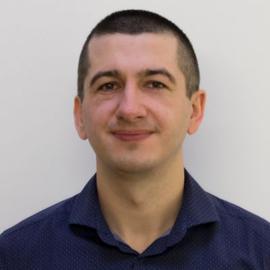
Dr. Ruslan Kurta
European XFEL, Holzkoppel 4, 22869 Schenefeld, GermanySpeech Title: Exploring Fingerprints of Ultrafast Structural Dynamics in Molecular Solutions with an X-ray Laser
Abstract: Understanding photoinduced chemical reactions at the electronic, atomic, and molecular length scales and on relevant timescales is essential for controlling reaction pathways, rates, and efficiencies. This knowledge is crucial for applications including catalysis, photoswitching, and light harvesting. X-ray free-electron lasers (XFELs) generate intense, ultrashort X-ray pulses, enabling chemical processes to be probed with high spatial and temporal resolution. Here, we use femtosecond XFEL pulses to investigate the ultrafast dynamics of the model photocatalyst [Ir2(dimen)4]2+ in solution (dimen = 1,8-diisocyano-p-menthane) [1]. Time-resolved X-ray solution-scattering experiments are combined with angular cross-correlation analysis to facilitate molecular structure determination in solution [1-4].
We perform a model-assisted analysis of the experimental X-ray scattering correlations, allowing us to elucidate several aspects of photoinduced structural changes in molecular ensembles [1]. We unambiguously determine that the photoinduced transition dipole moments in [Ir2(dimen)4]2+ are oriented perpendicular to the Ir–Ir bond. Our analysis further shows that the ground-state conformer with the larger Ir–Ir distance is predominantly responsible for excited-state formation. In addition, we demonstrate that the solute ensemble exhibits substantial structural heterogeneity arising from solvent effects.
The proposed correlation-based approach provides a complementary method for studying ultrafast structural dynamics in molecular ensembles in the liquid and gas phases, with relevance to catalysis, photosynthesis, nanoscience, and bioimaging [3,4].
Keywords: Ultrafast dynamics, x-ray free-electron laser, photoexcited molecules, x-ray cross-correlation analysis.
References:
[1] R. P. Kurta et al., Phys. Chem. Chem. Phys. 25, 23417 (2023)
[2] P. Vester et al., Struct. Dynamics 6, 024301 (2019)
[3] R. P. Kurta, M. Altarelli, I. A. Vartanyants, Adv. Chem. Phys. 161, Ch.1 (2016)
[4] R. P. Kurta, L. Wiegart, A. Fluerasu, A. Madsen, IUCrJ 16, 635 (2019)
Biography: Ruslan Kurta is a theoretical physicist at European XFEL, an international X-ray free-electron laser facility in Schenefeld, Germany. He completed his doctoral studies at the Max Planck Institute for Metals Research in Stuttgart, Germany, and received a Ph.D. in solid-state physics in 2010. Before joining European XFEL in 2014, he conducted postdoctoral research in the “X-ray Crystallography and Imaging” group at DESY in Hamburg, Germany. His research focuses on theoretical and computational methods for investigating the structure and ultrafast dynamics of materials and nanoscale systems using coherent X-ray laser pulses. He develops approaches for analyzing structurally disordered and partially ordered materials, molecular solutions, biological particles, and nanoparticles. A particular focus of his work is developing and applying statistical methods based on higher-order intensity correlations and rotational invariants for X-ray scattering and imaging.