
Invited Speaker
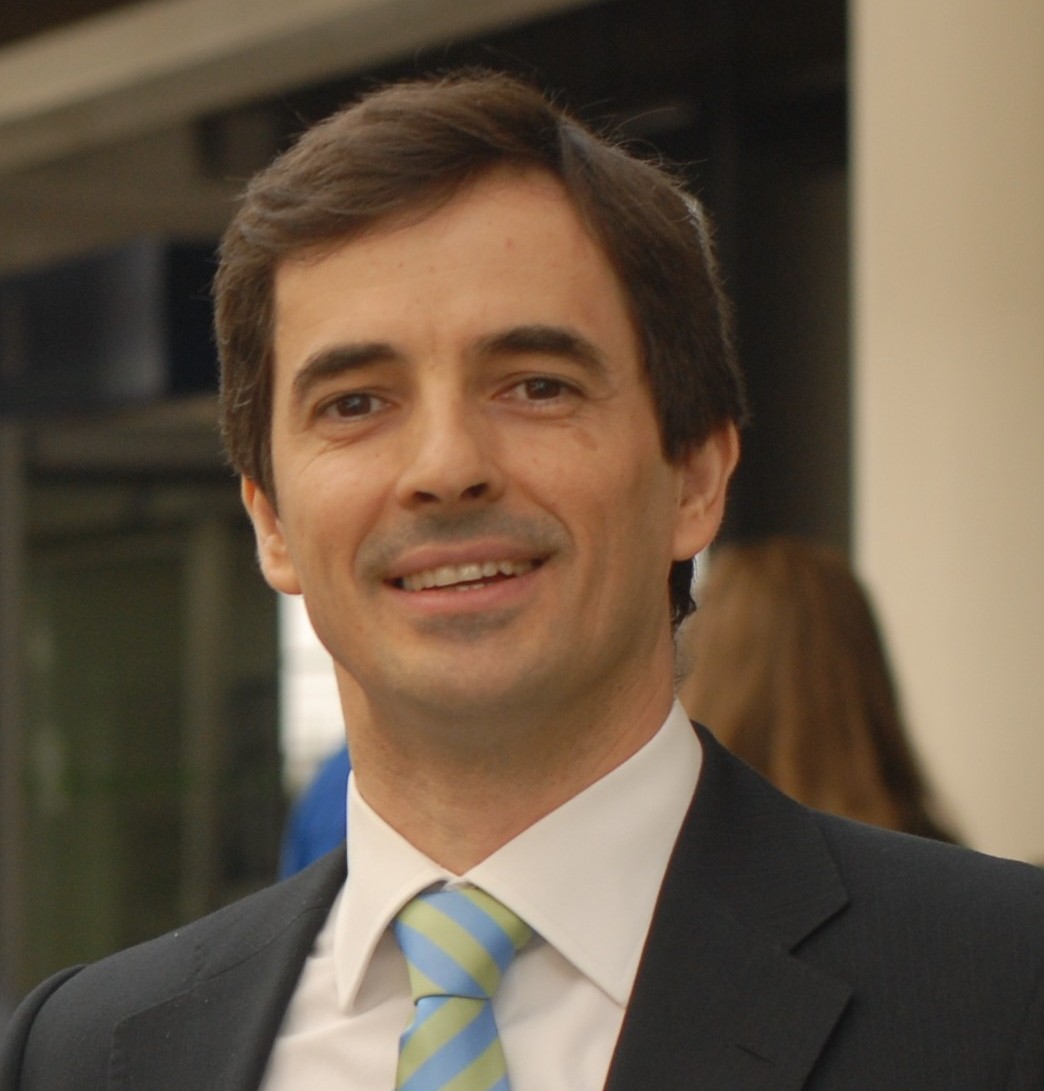
Prof. Paulo Flores
Department of Mechanical Engineering,University of Minho, Portugal
Speech Title: Modeling and Analysis of Lubricated Revolute Joints in Dynamics of Mechanical Systems
Abstract: Accurate modeling of lubricated joints, commonly referred to as journal bearings, in mechanical systems is essential for gaining a deeper understanding of machine dynamics. This is particularly important given the need for proper journal bearing design in many industrial applications. In this work, the incorporation of lubricated joint models into dynamical systems is examined. A general methodology is considered for modeling dynamically loaded journal bearings. The approach accounts for both squeeze-film and wedge-film effects. The governing equations of motion of mechanical systems incorporate the forces generated by lubrication effects. In journal bearing dynamic analysis, the hydrodynamic forces produced by the lubricant fluid, including squeeze and wedge effects, oppose the journal’s motion. The methodology applies the superposition principle by evaluating load capacity contributions from wedge entrainment and squeeze-film effects separately. Hydrodynamic forces are computed by integrating the pressure distribution obtained from Reynolds’ equation for dynamic conditions. These forces are nonlinear functions of the journal center’s kinematics relative to the bearing center. The present study employs Newton-Euler equations of motion and generalized Cartesian coordinates. Unlike an ideal revolute joint, a lubricated joint does not impose strict kinematic constraints but instead enforces force constraints. In practice, the hydrodynamic forces generated by the lubricant are evaluated from the system’s state variables and incorporated into the equations of motion. Finally, several mechanical systems are analyzed to illustrate the assumptions and procedures adopted. The results show that lubrication effects in mechanical joints can produce a predictable nonlinear dynamic response, a feature that plays a crucial role in the analysis, design, and control of general mechanical systems.
Keywords: Lubricated joints, Hydrodynamics approach, Dynamical Systems
Acknowledgements: (This work was supported by Fundação para a Ciência e a Tecnologia within the R&D units projects: UID/04436/2025 – Centro de Microssistemas Eletromecânicos of the University of Minho).
Biography: Paulo Flores is Full Professor at the University of Minho (2013). He received his BS in Mechanical Engineering from University of Minho (1997). He holds a PhD in Mechanical Engineering from the University of Minho (2005), in collaboration with University of Lisbon (PT) and Wichita State University (KS). Paulo Flores concluded post-doctoral studies at the ETH-Zurich (2009). He concluded his habilitation in Mechanical Engineering at the University of Minho (2011). Paulo Flores concluded post-doctoral studies at The University of Arizona (2012). He received a Doctor Honoris Causa from the Technical University of Iasi (2024). Paulo Flores’ interests include Multibody Dynamics, Contact-Impact Mechanics, Tribology, Computer-Aided Design. Paulo Flores chaired the Technical Committee for Multibody Dynamics of IFToMM - International Federation for the Promotion of Mechanism and Machine Science (2014-2019). He is editor-in-chief of the Mechanism and Machine Theory journal.