Keynote Speaker
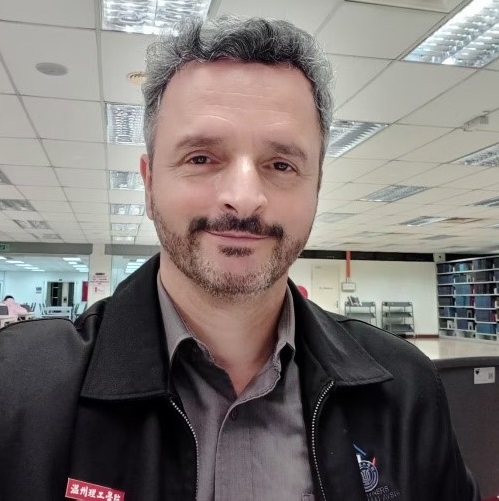
Prof. Payam Shafigh
College of Architecture and Energy Engineering, Wenzhou University of Technology, ChinaDirector, Zhejiang-Malaysia Joint Laboratory on Marine Low-carbon (Green) Building Materials
Speech Title: Structural Lightweight Concrete for Marine and Special Structures: Research and Practice
Abstract: As the most consumed man-made material, concrete is used in a wide range of applications in construction projects. It is generally considered a heavy material while it is also responsible for a significant portion of the carbon footprints of the construction sector. Structural Lightweight Concrete (LWC), which is typically made of a type of lightweight aggregate, is a type of concrete designed to lower the overall weight of concrete and structures while maintaining its strength and integrity. Typically, its density ranges between 1.4 to 2.0 tonnes per cubic meter with a compressive strength ranging between 20 to 70 MPa. After the fall of the Roman Empire, the use of LWC was limited until the 20th century and was used to build the warship in the First World War in the USA. The structural applications of LWAC got more attention due to its properties from the energy-related floating structures, due to it can reduce the weight of structures up to 50% while submerged in water compared to normal weight concrete. Although, there are numerous direct and indirect benefits of using structural LWC in construction industry including reducing foundation costs, enable longer span bridges, high durability, easier handling and transportation, environmental impact, and savings in time, energy and labour costs; however, its application in structures particularly in marine and high-rise building structures is still limited in many countries.
Keywords: Concrete Technology, Special Concrete, Lightweight Aggregate, Building, Bridge
Biography: Payam Shafigh has received his doctoral degree (with distinction) in Structural Engineering & Materials from the Universiti Malaya in 2013 and obtained his MSc in Civil Engineering Structure (2003) and BSc in Civil Engineering (2000) from the Babol Noshirvani University of Technology, Iran. He worked in the Universiti Malaya from 2013 to 2024 in different academic positions and he is currently working as a Distinguished Professor in the College of Architecture and Energy Engineering, Wenzhou University of Technology, Wenzhou, China. He is a Chartered Fellow of the Chartered Association of Building Engineers (CABE) and a Graduate Member of the Institution of Civil Engineers (ICE), UK. He was listed among world's top 2% scientists by Stanford University for the years 2021 to 2025. He was involved in several public and private projects as site supervisor, building surveyor, and applied advanced concrete materials in bridges and buildings such as structural lightweight aggregate concrete in Terengganu Drawbridge, Malaysia.